Blog Post Details Page
07:27 AM | October 19, 2026 3 Views
What Is the Difference Between Fatty Liver, Fibrosis, and Cirrhosis?
Fatty liver, liver fibrosis and cirrhosis are three related but different liver conditions. Understanding the difference between fatty liver, fibrosis, and cirrhosis can help you interpret medical reports, understand your risk of liver damage, and discuss appropriate tests with your doctor.
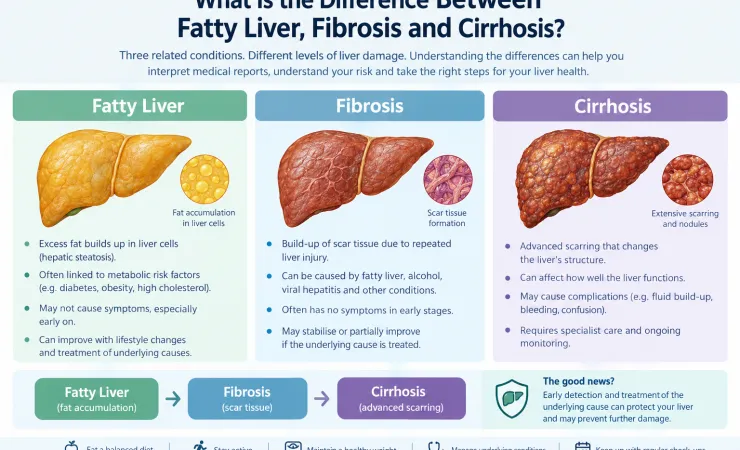
Fatty liver means excess fat has accumulated in liver cells. Fibrosis develops when repeated liver injury causes scar tissue to form. Cirrhosis is an advanced stage of liver scarring that changes the liver’s structure and can affect its ability to function.
Although these conditions can occur as part of the same disease process, they do not always progress from one stage to another. Early assessment and treatment of the underlying cause can help protect liver health.
Fatty Liver vs Fibrosis vs Cirrhosis
Fatty liver is the accumulation of excess fat in liver cells. Fibrosis is the formation of scar tissue after repeated liver injury. Cirrhosis is advanced, extensive scarring that disrupts the liver’s structure and may impair its function. Early fatty liver and some fibrosis can improve, while cirrhosis requires specialist care to manage damage and complications.
What Is the Difference Between Fatty Liver, Fibrosis, and Cirrhosis?
1. What Is Fatty Liver?
Fatty liver occurs when excess fat builds up inside liver cells. The condition is also called hepatic steatosis.
One common cause is metabolic dysfunction-associated steatotic liver disease , which is associated with metabolic risk factors such as insulin resistance, type 2 diabetes, excess body weight and abnormal cholesterol levels. Alcohol-related liver disease and certain medicines can also cause fat accumulation.
Fatty liver may not cause noticeable symptoms, particularly in its early stages. Some people discover it during an ultrasound or routine health assessment.
Fat accumulation does not automatically mean the liver is inflamed or scarred. However, some people develop metabolic dysfunction-associated steatohepatitis (MASH), a form of fatty liver disease involving inflammation and liver cell injury. Persistent injury can lead to fibrosis.
2. What Is Liver Fibrosis?
Liver fibrosis is the build-up of scar tissue in response to repeated or ongoing liver injury.
When the liver attempts to repair damaged cells, it produces scar-forming proteins. Over time, excessive scar tissue can affect the liver’s normal structure and blood flow.
Common causes include:
Fatty liver disease associated with metabolic risk factors.
Long-term alcohol-related liver injury.
Chronic hepatitis B or hepatitis C.
Certain autoimmune, genetic or other liver conditions.
Fibrosis is often described in stages, from F0 to F4. F0 indicates no fibrosis, while F1, F2 and F3 represent increasing degrees of scarring. F4 generally corresponds to cirrhosis.
Importantly, fibrosis does not automatically lead to cirrhosis. Its progression depends on the underlying cause, how long the liver remains exposed to injury, and whether appropriate treatment is provided.
3. What Is Liver Cirrhosis?
Cirrhosis develops when extensive scar tissue causes lasting changes to the liver’s structure.
As healthy tissue is replaced by scar tissue, blood may have greater difficulty flowing through the liver. The liver may also become less effective at processing nutrients, producing essential proteins and clearing waste products.
Possible complications include fluid accumulation in the abdomen, internal bleeding from enlarged blood vessels, confusion related to liver dysfunction and an increased risk of liver cancer.
Cirrhosis can be compensated, meaning the liver still performs enough of its functions to prevent major complications, or decompensated, when serious complications develop.
Although cirrhosis is advanced disease, treating its cause can slow further damage and improve outcomes. Some improvement in scarring may occur in selected circumstances, but established cirrhosis should never be assumed to have resolved.
Key Differences at a Glance
Feature
Fatty liver
Liver fibrosis
Cirrhosis
Main problem
Excess fat
Scar tissue
Extensive scarring
Liver structure
Fat accumulation; structure may remain preserved
Increasing tissue stiffness and scarring
Major structural changes
Symptoms
Often absent
Frequently absent in early stages
May be absent initially or include serious complications
Potential to improve
Often improves with appropriate management
May stabilise or partially regress
Requires specialist management; established damage may persist
Main assessment
Blood tests and imaging
Fibrosis scores and liver stiffness tests
Clinical assessment, blood tests, imaging and sometimes additional tests
Symptoms, Causes and Risk Factors
Common Symptoms
All three conditions can exist without obvious symptoms. When symptoms occur, they may include:
Persistent tiredness or weakness.
Discomfort in the upper-right abdomen.
Reduced appetite or unexplained weight changes.
Yellowing of the skin or eyes, known as jaundice.
Swelling in the legs or fluid accumulation in the abdomen in advanced disease.
Symptoms alone cannot reliably distinguish fatty liver from fibrosis or cirrhosis.
Main Causes and Risk Factors
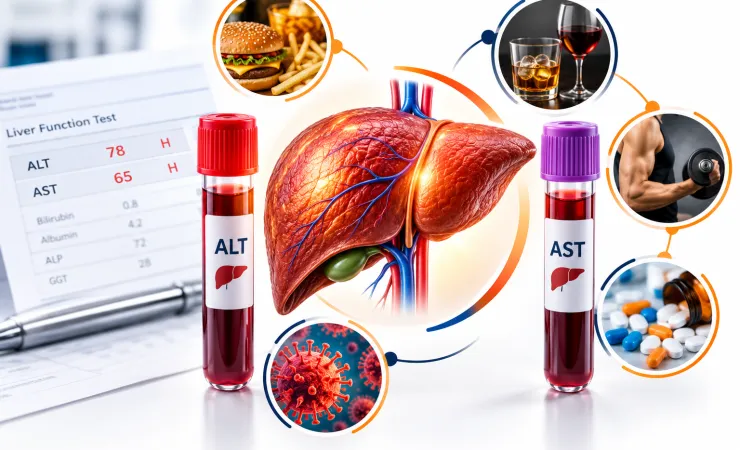
Factors that can contribute to chronic liver injury include type 2 diabetes, excess body weight, abnormal blood fats, harmful alcohol intake, viral hepatitis and certain medications.
A person can develop liver fibrosis without having fatty liver. Similarly, having fatty liver does not mean that cirrhosis will inevitably develop.
Your doctor will consider your medical history, metabolic health, medication use, alcohol intake and family history when assessing your individual risk.
Diagnosis and Testing: How Do Doctors Identify Liver Damage?
Blood Tests
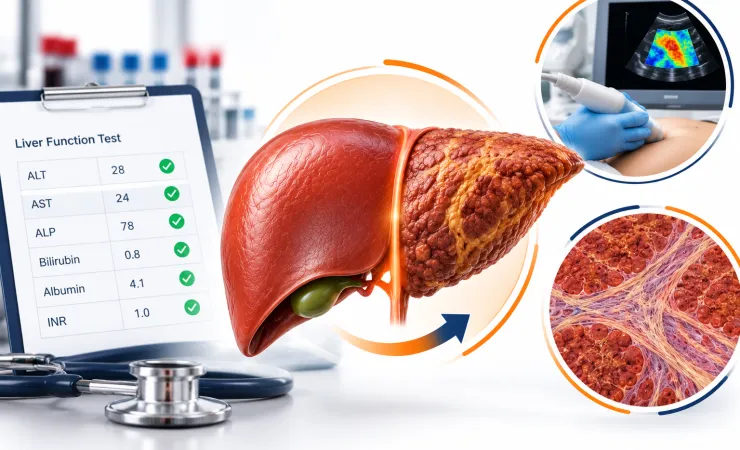
Doctors may assess liver enzymes, bilirubin, albumin, platelet counts and other blood measurements.
The FIB-4 score uses age, AST, ALT and platelet count to estimate the likelihood of advanced liver fibrosis. It helps guide decisions about further testing, but it is not a definitive diagnosis and must be interpreted in the appropriate clinical context.
Normal liver enzyme levels do not always rule out significant fibrosis.
Ultrasound and FibroScan
An ultrasound can identify visible signs of fat accumulation and structural abnormalities. However, a conventional ultrasound cannot reliably determine the degree of liver fibrosis or exclude early scarring.
FibroScan, a form of transient elastography, measures liver stiffness to help estimate fibrosis. Other specialised imaging methods or blood-based tests may also be used.
A liver biopsy is sometimes necessary when the diagnosis remains uncertain or more detailed assessment is needed, although many patients can be evaluated without one.
Treatment and Management
Managing Fatty Liver
Treatment depends on the underlying cause. For people with metabolic risk factors, management may include gradual weight loss when appropriate, regular physical activity, a balanced diet and good control of diabetes and cholesterol.
Avoid crash diets and unverified supplements, which may be ineffective or harmful.
Managing Liver Fibrosis
The main goal is to identify and treat the cause of ongoing liver injury. Depending on the diagnosis, this may involve antiviral treatment, stopping alcohol, managing metabolic conditions or reviewing medicines with a clinician.
Early fibrosis may stabilise or partially improve when the underlying cause is successfully controlled.
Managing Cirrhosis
Cirrhosis requires individualised medical care. Treatment focuses on controlling the cause, preventing complications and monitoring liver function. Depending on the patient's condition, doctors may recommend surveillance for liver cancer, assessment for internal bleeding risks or other specialist care.
Lifestyle changes remain important, but they do not replace medical treatment for established cirrhosis.
Practical Tips for Patients and Caregivers
Keep copies of laboratory results, imaging reports and medication lists.
Attend recommended follow-up appointments, even when you feel well.
Discuss alcohol use, supplements and over-the-counter medicines with your healthcare professional.
Follow an eating and activity plan suited to your health conditions.
Ask whether you need a fibrosis risk assessment rather than relying on ultrasound findings alone.
Digital tools such as the Liverlytics mobile application can help organise liver health records, laboratory results, symptoms and nutrition information. Where clinically relevant, users can also record MELD 3.0 scores and sodium measurements, view historical trends, select date ranges and generate reports for consultations. These functions support record-keeping; they do not diagnose disease or replace clinical interpretation.
Common Mistakes and Misconceptions
Myth 1: Every person with fatty liver will develop cirrhosis.
Not true. Many people do not develop advanced scarring, and progression varies considerably between individuals.
Myth 2: Normal blood tests mean there is no liver scarring.
Not necessarily. Some people with advanced fibrosis have normal or near-normal liver enzyme results.
Myth 3: An ultrasound can determine every stage of liver disease.
A conventional ultrasound can show fat and some structural changes, but it cannot reliably establish the extent of fibrosis.
Myth 4: Liver fibrosis always causes symptoms.
Early fibrosis commonly produces no noticeable symptoms. Appropriate testing is important for people whose medical history or test results indicate increased risk.
When Should You Speak to a Doctor?
Arrange a medical assessment if you have persistent abnormal liver tests, a report suggesting fatty liver, risk factors such as type 2 diabetes, or a family or personal history of liver disease.
Seek urgent medical care for vomiting blood, black tarry stools, new confusion or unusual drowsiness. New jaundice, increasing abdominal swelling or significant unexplained weight loss also requires prompt medical assessment.
Expert Insights: What Patients Should Know
The amount of fat in the liver and the degree of liver scarring are different measurements. A report describing mild fatty liver does not establish whether fibrosis is present, while the absence of visible fat does not exclude fibrosis caused by another condition.
The most useful question is not simply whether the liver contains fat, but whether ongoing injury or significant scarring is present.
For people at increased risk, combining clinical history, blood-based assessment and appropriate imaging can provide a clearer picture than relying on one test. Monitoring should be individualised according to the diagnosis and the clinician’s assessment.
People Also Ask
Is fatty liver the same as cirrhosis?
No. Fatty liver refers to excess fat in liver cells, while cirrhosis involves advanced scarring and structural changes.
Can liver fibrosis be reversed?
Some fibrosis can stabilise or partially regress when the underlying cause is treated. The extent of improvement depends on the severity and cause of the disease.
Does fatty liver always progress to fibrosis?
No. Progression is not inevitable. Risk depends on factors such as metabolic health, the underlying liver condition and ongoing injury.
Can an ultrasound detect liver fibrosis?
A conventional ultrasound cannot reliably stage fibrosis. Elastography and blood-based fibrosis scores can provide additional information.
Can you have cirrhosis without symptoms?
Yes. Compensated cirrhosis may produce few or no noticeable symptoms, which is one reason medical assessment and monitoring matter.
Frequently Asked Questions
1. What is the first stage of liver disease?
There is no single sequence for every liver condition. In fatty liver disease, fat accumulation may occur without fibrosis. Scarring can develop if ongoing injury persists.
2. How long does fatty liver take to become cirrhosis?
There is no fixed timeline. Many people never develop cirrhosis, while others may progress over years depending on the cause and severity of liver injury.
3. Does a FibroScan confirm cirrhosis?
FibroScan measures liver stiffness and helps estimate fibrosis risk. Its results need to be interpreted alongside medical history, blood tests and other findings.
4. Can liver fibrosis occur without alcohol use?
Yes. Metabolic liver disease, chronic viral hepatitis, autoimmune conditions and other disorders can cause fibrosis in people who do not drink alcohol.
5. Can diet improve fatty liver?
A balanced diet, appropriate portion sizes and regular exercise can help reduce liver fat, particularly when metabolic risk factors are present. Individual advice depends on overall health.
6. Are liver supplements safe for fibrosis?
Not always. Some herbal products and supplements can damage the liver or interact with medicines. Discuss them with your healthcare professional before use.
7. Can people live with cirrhosis for many years?
Yes. Outcomes vary according to liver function, the cause of cirrhosis, complications and response to treatment. Regular specialist care is important.
8. Does mild fatty liver require follow-up?
Follow-up depends on your medical history and risk factors. Your doctor may recommend metabolic assessment, blood tests or fibrosis risk assessment to determine the appropriate monitoring plan.
Key Takeaways
Fatty liver means fat accumulation; fibrosis means scar tissue; cirrhosis means advanced scarring.
Fatty liver does not always progress to fibrosis or cirrhosis.
Blood tests and conventional ultrasound alone may not fully establish the degree of scarring.
Early treatment of the underlying cause can improve liver health and may help prevent further damage.
Cirrhosis requires specialist management and monitoring for complications.
Organised health records can support follow-up, but medical decisions should be made with a qualified healthcare professional.
Conclusion
The difference between fatty liver, fibrosis, and cirrhosis lies mainly in the type and extent of liver damage. Fatty liver describes excess fat, fibrosis describes scarring, and cirrhosis represents advanced structural damage.
An abnormal liver report does not automatically mean cirrhosis. The appropriate next step is to understand the underlying cause and, when indicated, assess fibrosis risk with your doctor. Early evaluation and consistent care can make a meaningful difference to long-term liver health.

“ Waste no more time arguing what a good man should be, be one. ”
— Marcus Aurelius
Let’s Get in Touch
Your email address will not be published. Required fields are marked *
Recent Post

Looking for a Smarter Way to Track Liver Health?
Try it stress-free — We never modify medical data without your confirmation.

Comments :
Ooops!
No comments found.