Blog Post Details Page
05:38 PM | September 19, 2026 70 Views
What Pain Does Your Liver Cause? Location, Sensation, and Red Flags
A dull ache under the right ribs can immediately make someone wonder, “Is this liver pain?”
That is understandable. The liver sits mainly in the upper-right part of the abdomen, underneath the rib cage. Some liver conditions can cause discomfort in this area, but many liver diseases cause no noticeable pain at all.
There is another important complication: the liver shares this region with the gallbladder, bile ducts, stomach, intestine, abdominal wall and other structures. Pain in the “liver area” therefore does not necessarily come from the liver.
This guide explains what liver-related discomfort can feel like, where it may occur, which conditions can cause it, how doctors investigate it and which symptoms should never be ignored.
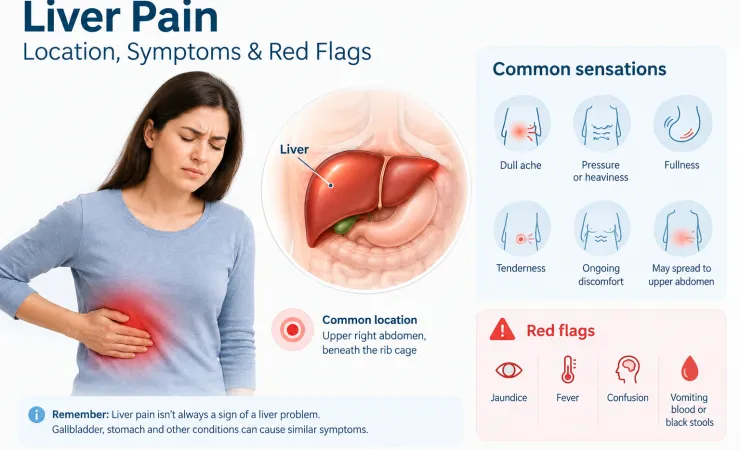
Liver-related pain is usually felt in the upper-right part of the abdomen, beneath the right rib cage, and may feel like mild discomfort, pressure, fullness or an ache. However, many liver diseases cause no pain. Gallbladder, stomach, muscle and other conditions can cause similar symptoms, so persistent or severe pain needs medical assessment.
What Is Liver Pain?
Definition
“Liver pain” is a patient-friendly term rather than a precise medical diagnosis.
The liver occupies much of the upper-right abdomen and extends partly towards the centre of the upper abdomen. When a liver condition causes discomfort, people may describe it as pain, pressure, tenderness or a feeling of fullness in that region.
Importantly, the location of pain cannot identify its cause by itself.
Why It Matters
One of the most important facts about liver disease is that symptoms and disease severity do not always match.
For example, metabolic dysfunction-associated steatotic liver disease (MASLD), previously called NAFLD, is often silent. When symptoms occur, upper-right abdominal discomfort can be one of them.
Cirrhosis can also remain symptom-free in its early stages, with symptoms becoming more apparent as liver damage progresses.
So having no liver pain does not prove that the liver is healthy.
Key Facts About Liver Pain
Several points can help put right-sided abdominal pain into perspective:
The liver is located mainly in the upper-right abdomen.
Liver disease does not always cause pain.
When liver-related discomfort occurs, it may be felt beneath the right ribs.
An enlarged liver can produce discomfort or a sense of fullness.
Gallbladder disease can cause very similar pain.
Blood tests and imaging are often more useful than pain location alone for identifying the cause.
Severe pain, jaundice, fever, confusion or gastrointestinal bleeding can indicate a serious problem requiring urgent assessment.
What Does Liver Pain Feel Like?
Common Sensations
There is no single sensation that proves pain is coming from the liver.
People with liver conditions may describe discomfort as:
A dull ache
Pressure or heaviness
A feeling of fullness under the right ribs
Mild tenderness
A persistent uncomfortable sensation
Discomfort extending towards the upper abdomen
NIDDK specifically describes mild pain or discomfort over the liver in the upper-right abdomen as a possible symptom of cirrhosis.
Some people with liver enlargement can experience discomfort because the enlarged organ occupies more space within the abdomen.
Where Is Liver Pain Located?
The classic location is the upper-right quadrant of the abdomen, beneath the right rib cage.
However, discomfort may sometimes be perceived more centrally in the upper abdomen. Pain near the right shoulder or upper back is more characteristic of some gallbladder conditions, although symptoms can overlap.
This overlap is why trying to identify the affected organ simply by pointing to a location is unreliable.
Symptoms, Causes and Risk Factors
Common Symptoms That May Occur With Liver Disease
Depending on the underlying condition, liver disease may be associated with:
Fatigue
Poor appetite
Nausea
Itching
Yellow skin or eyes
Dark urine
Pale stools
Abdominal swelling
Easy bruising or bleeding
Weight loss
Confusion in advanced disease
Many of these symptoms are not specific to the liver and can occur with other illnesses.
Main Causes of Liver-Related Discomfort
Fatty liver and MASLD
MASLD can cause upper-right abdominal discomfort, although most people have few or no symptoms.
Risk factors include overweight or obesity, insulin resistance, type 2 diabetes, abnormal blood lipids and metabolic syndrome.
Hepatitis
Inflammation caused by viral hepatitis or autoimmune hepatitis can sometimes produce pain or discomfort in the upper abdomen. Autoimmune hepatitis, for example, may cause pain over the liver as well as fatigue, nausea and jaundice.
Cirrhosis
Cirrhosis can cause mild discomfort over the liver, although early cirrhosis frequently has no symptoms. As liver function deteriorates, complications can include swelling, bleeding and changes in mental function.
Liver enlargement
An enlarged liver can produce upper-right abdominal discomfort or a sensation of fullness. Various conditions can enlarge the liver, so enlargement itself is not a diagnosis.
Liver tumours
Liver cancer may cause pain in the upper-right abdomen or right shoulder, but it may also produce no symptoms initially. Other possible symptoms include jaundice, unexplained weight loss, reduced appetite and abdominal swelling.
Risk Factors
The risk of liver disease varies considerably depending on the condition.
Relevant factors can include:
Excessive alcohol consumption
Obesity or metabolic syndrome
Type 2 diabetes
Viral hepatitis exposure
Certain medicines
Some inherited conditions
Autoimmune diseases
Previous liver disease
Certain cancers
A person's risk factors help doctors decide which investigations are appropriate.
Liver Pain vs Gallbladder Pain: Why the Difference Matters
This is one of the most commonly overlooked issues when people search for “liver pain”.
The gallbladder sits beneath the liver. Gallstones can cause biliary colic, typically producing pain in the right upper abdomen or upper central abdomen. The pain can be intense, persistent for several hours and sometimes radiate towards the back or shoulder.
Acute cholecystitis, an inflammation of the gallbladder, can cause right-upper-abdominal pain with tenderness and may be accompanied by fever, chills, nausea or vomiting.
Therefore:
Pain under the right ribs does not automatically mean the liver is the source.
Other possibilities include gallstones, stomach or intestinal disorders, pancreatitis, kidney problems and abdominal-wall or muscle pain.
Diagnosis and Testing
Diagnostic Methods
A healthcare professional may start by asking:
Where exactly is the pain?
When did it begin?
Is it constant or intermittent?
Does food affect it?
Does movement or breathing change it?
Does it radiate to the back or shoulder?
Are there symptoms such as fever, vomiting or jaundice?
What medicines and supplements do you take?
Do you drink alcohol?
Do you have known liver or metabolic disease?
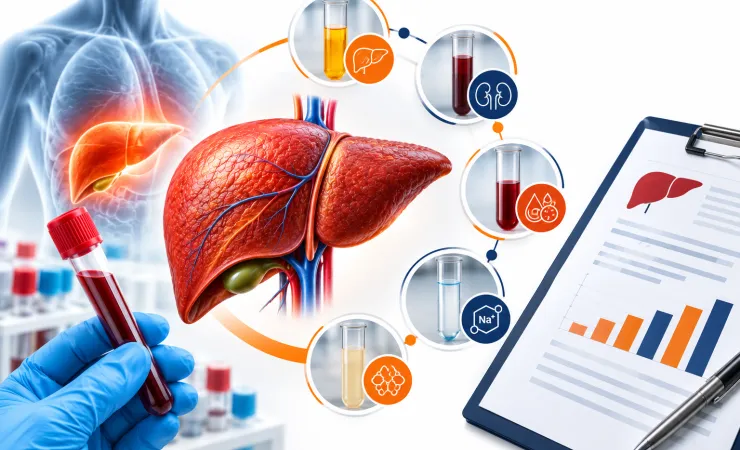
Blood tests may include liver enzymes, bilirubin, albumin and other markers depending on the clinical situation. Testing for viral hepatitis or autoimmune disease may also be appropriate.
Ultrasound is commonly used to evaluate the liver and biliary system. More advanced imaging or elastography may be used when clinically indicated.
Understanding Results
A common mistake is to assume:
“My liver enzymes are normal, so this pain cannot be liver-related.”
That conclusion is too strong.
Blood tests are important, but doctors interpret them together with symptoms, examination and imaging. Conversely, abnormal liver enzymes do not automatically prove that the pain is coming from the liver.
The aim is to identify the cause of the pain, not simply label its location.
Treatment and Management
Medical Treatments
There is no single treatment for “liver pain”.
Treatment depends entirely on the cause.
For example:
Gallstones may require a different approach from hepatitis.
MASLD management focuses on metabolic health and lifestyle.
Viral hepatitis may require antiviral treatment.
Advanced liver disease requires specialist monitoring.
A suspected tumour requires appropriate imaging and specialist assessment.
Treating the underlying problem is more important than simply masking the pain.
Lifestyle Management
For people with metabolic liver disease, lifestyle measures may include improving dietary quality, increasing physical activity and addressing weight, blood glucose and cholesterol where appropriate.
Alcohol intake should be discussed honestly with a healthcare professional if liver disease is suspected or diagnosed.
Do not assume that herbal “liver cleanses” or supplements are harmless. Some medicines and supplements can themselves cause liver injury.
Monitoring Progress
If you are undergoing evaluation for chronic liver disease, keeping previous blood-test and imaging results organised can help your healthcare team see how your condition changes over time.
Supportive tools such as the Liverlytics mobile applicationcan help organise liver-health information, historical results and trends. Users can review data over selected date ranges, view graphs and prepare reports for consultations. For people with established chronic liver disease, information such as MELD 3.0 scores and sodium results can also be organised in one place.
These tools are for record keeping and consultation preparation; they do not diagnose the cause of pain or replace clinical care.
Practical Tips for Patients and Caregivers
If you are experiencing pain in the liver area, note:
Exact location — right ribs, centre, back or shoulder.
Quality — dull, sharp, burning, cramping or pressure.
Duration — seconds, hours, days or weeks.
Pattern — constant or comes and goes.
Triggers — meals, alcohol, exercise, movement or breathing.
Associated symptoms — fever, vomiting, jaundice, dark urine or pale stools.
Previous results — liver blood tests, ultrasound or other imaging.
This information can make a medical consultation much more useful.
Common Mistakes and Misconceptions
“If my liver hurts, I must have liver disease.”
Not necessarily. Gallbladder and other abdominal conditions can cause pain in exactly the same region.
“Fatty liver always causes pain.”
No. MASLD is often silent, and many people have no symptoms.
“Severe liver disease always causes severe pain.”
No. Serious liver disease can exist with little or no abdominal pain, particularly in earlier stages.
“Pain after eating always means a fatty liver.”
Not necessarily. Pain after meals can have several causes, including gallbladder disease and gastrointestinal conditions.
“I can diagnose liver damage by pressing under my ribs.”
No. Tenderness or discomfort cannot establish the cause of abdominal pain.
When Should You Speak to a Doctor?
Arrange medical assessment if pain:
Persists or repeatedly returns
Is unexplained
Occurs alongside abnormal liver tests
Is associated with jaundice
Comes with unexplained weight loss
Occurs with persistent nausea or vomiting
Is accompanied by abdominal swelling
Seek urgent medical attention for red flags
Severe or rapidly worsening abdominal pain deserves urgent assessment, particularly when accompanied by:
Fever or chills
Jaundice
Persistent vomiting
Confusion or marked drowsiness
Vomiting blood
Black or bloody stools
Significant abdominal swelling
Fainting or severe weakness
Marked abdominal pain, altered mental status and gastrointestinal bleeding are recognised red flags in patients with possible significant liver disease.
Jaundice accompanied by significant right-upper-abdominal pain and fever can also raise concern for serious biliary infection.
Expert Insights
The most useful distinction is “where the pain is” versus “what is causing it.”
The upper-right abdomen contains several structures. A person may accurately point to the liver's anatomical region while the actual problem originates from the gallbladder, bile ducts, stomach, bowel, abdominal wall or another structure.
Another important point is the mismatch between symptoms and liver damage. MASLD and early cirrhosis can be remarkably quiet.
That means a person should not use pain intensity as a home-made measure of liver health.
Recent patient discussions also show how confusing this symptom can be. People commonly describe sensations such as dull aching, throbbing, pressure or discomfort beneath the right ribs and wonder whether these sensations are actually coming from the liver. These accounts can help explain patient concerns, but they cannot establish a diagnosis.
The safest approach is to combine the symptom pattern with medical history, examination, laboratory tests and imaging when necessary.
People Also Ask
Where exactly is liver pain felt?
Usually in the upper-right abdomen beneath the right rib cage. Some liver conditions can also cause discomfort in the upper central abdomen.
What does liver pain feel like?
It may feel like an ache, pressure, tenderness or fullness. There is no specific sensation that proves pain comes from the liver.
Can fatty liver cause pain under the right rib?
Yes, upper-right abdominal discomfort can occur with fatty liver disease, but many people with MASLD have no symptoms.
Is liver pain worse after eating?
It can be, but pain related to meals is not specific to the liver. Gallbladder and gastrointestinal conditions can also produce post-meal pain.
Does liver pain radiate to the back?
Pain from conditions affecting the liver or nearby structures can sometimes be felt elsewhere, but radiation to the back or right shoulder is particularly recognised with some biliary conditions.
Can you feel an enlarged liver?
An enlarged liver may produce fullness or discomfort beneath the right ribs, but a physical examination or imaging is needed to determine whether the liver is enlarged.
Can liver disease cause pain without jaundice?
Yes. Jaundice is not present in every liver condition or every stage of liver disease. Some liver disorders cause few symptoms initially.
Frequently Asked Questions
Can liver pain come and go?
Yes, discomfort can be intermittent depending on the underlying condition. However, recurrent pain should not automatically be attributed to the liver.
Is a dull ache under the right rib always liver pain?
No. The gallbladder, bowel, stomach, abdominal muscles and other structures can produce pain in the same area.
Can alcohol cause pain in the liver area?
Alcohol-associated liver disease can affect the liver and may cause upper-right abdominal discomfort in some people, but pain alone cannot determine whether alcohol has damaged the liver.
Does liver inflammation cause pain?
Some inflammatory liver conditions can cause upper-abdominal discomfort or pain. Autoimmune hepatitis, for example, can cause pain over the liver.
Can liver cancer cause right-sided abdominal pain?
It can. Liver cancer may cause pain in the upper-right abdomen or right shoulder, although it may have no symptoms initially.
What tests check whether liver pain is serious?
Depending on the situation, doctors may use liver blood tests, viral hepatitis tests, ultrasound, CT, MRI or elastography. The choice depends on symptoms and suspected cause.
Can normal liver tests rule out liver disease?
Not in every situation. Laboratory results are interpreted alongside symptoms, examination, imaging and medical history.
Should I worry about pain if I have fatty liver?
Persistent or worsening pain should be discussed with a healthcare professional, especially if you develop jaundice, vomiting, fever, abdominal swelling or other new symptoms.
Can liver pain be treated at home?
The appropriate treatment depends on the cause. Avoid self-treating unexplained persistent abdominal pain with supplements or “liver detox” products.
Key Takeaways
Liver pain is usually felt in the upper-right abdomen beneath the ribs.
Liver disease does not always cause pain.
MASLD and early cirrhosis can have few or no symptoms.
Gallbladder disease can closely mimic liver pain.
Pain location alone cannot identify the affected organ.
Persistent or unexplained pain should be medically assessed.
Blood tests and imaging can help determine the underlying cause.
Jaundice, fever, severe pain, confusion or gastrointestinal bleeding are important warning signs.
Conclusion
So, what pain does your liver cause?
When liver disease produces discomfort, it is commonly felt as an ache, pressure or tenderness in the upper-right abdomen beneath the ribs. But there is no unique “liver pain” sensation that can reliably diagnose liver disease.
That is why the most important question is not simply “Does my liver hurt?” but “What is causing this pain?”
A persistent ache beneath the right ribs could involve the liver, but it could just as easily involve the gallbladder or another nearby structure. At the same time, serious liver disease may cause little or no pain.
If pain persists, repeatedly returns or occurs alongside jaundice, fever, vomiting, abdominal swelling, confusion or bleeding, medical assessment is important.
What Pain Does Your Liver Cause? Location, Sensation, and Red Flags

“ An unexamined life is not worth living. ”
— Socrates
Let’s Get in Touch
Your email address will not be published. Required fields are marked *
Recent Post
Looking for a Smarter Way to Track Liver Health?
Try it stress-free — We never modify medical data without your confirmation.

Comments :
Ooops!
No comments found.