Blog Post Details Page
09:57 AM | March 19, 2026 216 Views
Silent Progression of Cirrhosis: How Liver Damage Develops Without Symptoms
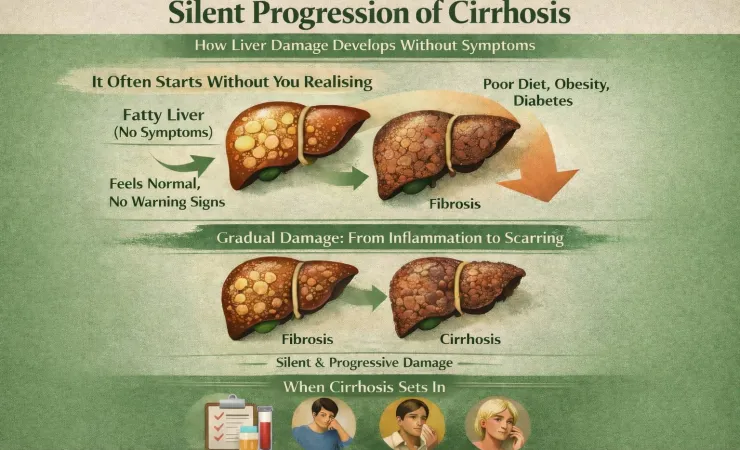
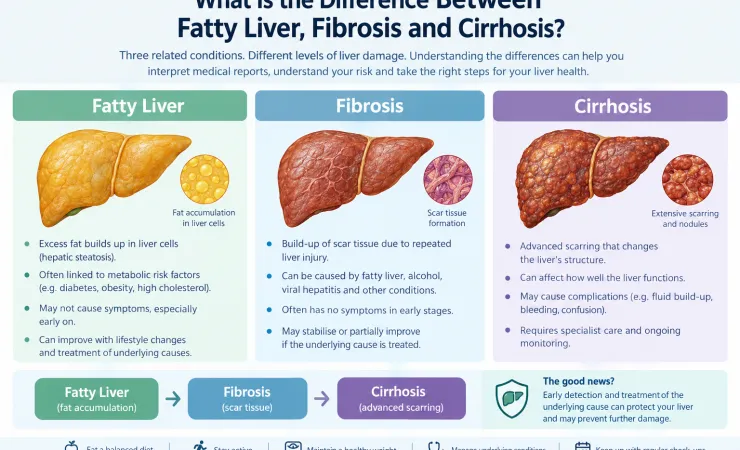
Cirrhosis develops silently over time, often starting as fatty liver, progressing to fibrosis, and eventually leading to permanent scarring of the liver. In its early stages, there are usually no symptoms, which makes regular monitoring essential for early detection.
For many people, this condition doesn’t begin with discomfort or visible warning signs. Instead, it quietly progresses in the background, making awareness and timely action incredibly important.
It Often Starts Without You Realising
In most cases, cirrhosis begins with fatty liver disease. While alcohol can be a cause, a growing number of cases today are linked to lifestyle factors such as poor diet, obesity, diabetes, and lack of physical activity.
At this stage, the liver starts accumulating fat within its cells. However, this change does not usually cause pain or noticeable symptoms. Most individuals feel completely normal and continue their daily routines without any indication that their liver is under stress.
Gradual Damage: From Inflammation to Scarring
If the underlying cause continues, the liver becomes inflamed. Over time, this inflammation leads to the development of scar tissue, a condition known as fibrosis.
The liver is a highly resilient organ and continues to function even when partially damaged. Because of this, the body often does not show clear signs during this phase. This is where the concept of a “silent disease” becomes very real—damage is progressing, but nothing feels wrong.
Without intervention, fibrosis gradually worsens, setting the stage for more serious complications.
When Cirrhosis Sets In
Cirrhosis occurs when scar tissue replaces a significant portion of healthy liver tissue. This affects the liver’s structure and its ability to function properly.
In the early stages of cirrhosis, symptoms are often mild and easy to overlook, such as:
Fatigue
Loss of appetite
General weakness
These symptoms are commonly mistaken for everyday stress or lifestyle-related tiredness.
As the condition advances, more serious symptoms may appear, including:
Yellowing of the skin and eyes (jaundice)
Swelling in the abdomen or legs
Easy bruising or bleeding
By this stage, the liver has already undergone considerable damage.
Why Awareness and Monitoring Are Important
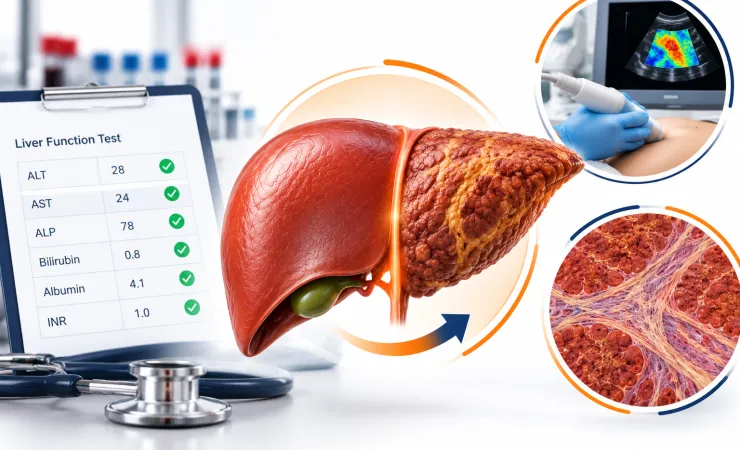
Because cirrhosis without symptoms is so common in the early stages, relying only on how you feel is not enough. Regular health check-ups, liver function tests, and imaging play a key role in detecting issues early.
Today, digital health tools are also helping individuals stay more proactive. Platforms like the Liverlytics app allow users to track their reports, monitor trends, and maintain a clear record of their liver health over time. This kind of continuous monitoring can make a meaningful difference, especially when symptoms are not yet visible.
A Condition That Stays Quiet, But Matters Deeply
Cirrhosis does not develop overnight. It is the result of a slow and silent process that often goes unnoticed until it becomes serious.
Understanding this progression is the first step towards prevention. When people become more aware of how liver damage develops, they are more likely to take early action—whether that means improving lifestyle habits, undergoing regular screenings, or simply staying informed.
In many ways, liver health is about paying attention even when everything feels normal. Because sometimes, the absence of symptoms does not mean the absence of disease.

“ People find pleasure in different ways. I find it in keeping my mind clear. ”
— Marcus Aurelius
Let’s Get in Touch
Your email address will not be published. Required fields are marked *
Recent Post


Looking for a Smarter Way to Track Liver Health?
Try it stress-free — We never modify medical data without your confirmation.

Comments :
Ooops!
No comments found.