Blog Post Details Page
06:21 AM | July 31, 2026 113 Views
Can You Live a Long Life With Liver Cirrhosis?
Hearing the words "you have liver cirrhosis" can be frightening. One of the first questions many patients and their families ask is, "Can you live a long life with liver cirrhosis?" The answer is more hopeful than many people expect. Although cirrhosis is a serious condition that causes permanent scarring of the liver, it does not always mean that life expectancy is dramatically shortened.
Many people with compensated cirrhosis, where the liver can still perform most of its essential functions, live for many years with appropriate treatment, regular monitoring, and healthy lifestyle changes. Even in more advanced stages, modern medical care has significantly improved the management of complications, helping many patients maintain a better quality of life than in the past.
Life expectancy varies from person to person. Factors such as the underlying cause of cirrhosis, the severity of liver damage, age, overall health, and how well the condition is managed all play important roles. Early diagnosis and consistent follow-up with a liver specialist can often slow disease progression and reduce the risk of serious complications.
This article explains what liver cirrhosis is, how it affects long-term survival, the factors that influence prognosis, available treatment options, and practical steps patients and caregivers can take to support liver health. It also highlights the importance of regular monitoring and informed discussions with healthcare professionals.
Yes, many people can live a long life with liver cirrhosis, especially when the condition is diagnosed early and managed effectively. Life expectancy depends on factors such as the stage of cirrhosis, its underlying cause, overall liver function, and whether complications develop. Regular medical care, healthy lifestyle choices, and timely treatment can help improve both survival and quality of life.
What Is Liver Cirrhosis? + Key Facts
What Is Liver Cirrhosis?
Definition
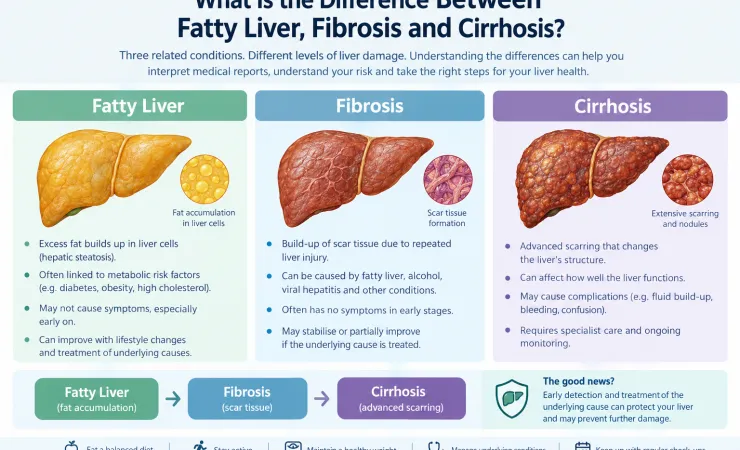
Liver cirrhosis is a chronic, progressive liver disease in which healthy liver tissue is gradually replaced by scar tissue (fibrosis). This scarring develops after years of repeated liver injury caused by conditions such as chronic viral hepatitis, excessive alcohol consumption, metabolic dysfunction-associated steatotic liver disease (MASLD), autoimmune liver diseases, or inherited liver disorders.
Unlike healthy liver tissue, scar tissue cannot perform the liver's normal functions. As fibrosis becomes more extensive, it disrupts blood flow through the liver and reduces its ability to carry out vital tasks such as:
Filtering toxins from the blood
Producing proteins needed for blood clotting
Processing nutrients and medicines
Producing bile for digestion
Storing vitamins and minerals
Regulating metabolism and energy balance
Although the scarring itself is generally permanent, early diagnosis and treatment of the underlying cause can slow or sometimes halt further progression. In some cases, reducing liver inflammation may allow limited improvement in liver function, but established cirrhosis is not considered fully reversible.
Why It Matters
The liver is one of the body's most important organs, performing hundreds of essential functions every day. When cirrhosis develops, these functions gradually become impaired, increasing the risk of complications that can affect nearly every part of the body.
However, a diagnosis of cirrhosis is not the same as liver failure.
Many people spend years in the compensated stage, during which the liver continues to perform most of its essential functions despite the presence of scarring. During this period, patients may experience few or no symptoms and often maintain a good quality of life with appropriate medical care.
Problems become more serious if cirrhosis progresses to decompensated cirrhosis, where the liver can no longer compensate for the damage. This may lead to complications such as:
Fluid accumulation in the abdomen (ascites)
Bleeding from enlarged veins in the oesophagus or stomach (varices)
Confusion caused by toxin build-up (hepatic encephalopathy)
Jaundice (yellowing of the skin and eyes)
Kidney dysfunction
Increased risk of liver cancer (hepatocellular carcinoma)
Recognising cirrhosis early allows healthcare professionals to monitor patients closely, treat complications promptly, and improve long-term outcomes.
Key Facts About Liver Cirrhosis
Understanding the facts about liver cirrhosis can help reduce anxiety and support informed decision-making.
Cirrhosis develops gradually
Liver cirrhosis usually develops over many years rather than suddenly. Early liver damage often causes few symptoms, which is why routine health checks and blood tests are important for people at increased risk.
Early diagnosis improves outcomes
People diagnosed before complications develop generally have a much better outlook. Treating the underlying cause—such as controlling hepatitis B or C, stopping alcohol consumption, or managing MASLD—can significantly slow disease progression.
Not everyone has the same life expectancy
There is no single life expectancy for people with liver cirrhosis. Prognosis depends on several factors, including:
The stage of cirrhosis
The underlying cause
Age and general health
Presence of complications
Response to treatment
Ongoing alcohol use (if applicable)
Some individuals live for decades with compensated cirrhosis, while others with advanced disease may require more intensive treatment or assessment for liver transplantation.
Compensated and decompensated cirrhosis are different
Compensated cirrhosis means the liver is still functioning relatively well despite scarring.
Decompensated cirrhosis occurs when complications such as ascites, variceal bleeding, hepatic encephalopathy, or jaundice develop, indicating more advanced disease and the need for specialist care.
Regular monitoring is essential
Because liver disease can change over time, ongoing monitoring helps identify complications early. Healthcare providers may recommend:
Blood tests to assess liver function
Ultrasound scans
Screening for liver cancer
Endoscopy to detect oesophageal varices
Assessment of kidney function
Nutritional evaluations
Monitoring trends over time is often more informative than relying on a single test result.
Lifestyle changes make a meaningful difference
Medical treatment is only one part of managing cirrhosis. Patients are often advised to:
Avoid alcohol completely
Maintain a balanced diet with adequate protein (unless otherwise advised)
Stay physically active within their abilities
Achieve or maintain a healthy weight
Take medications exactly as prescribed
Attend all follow-up appointments
Stay up to date with recommended vaccinations
These measures can help reduce complications and support overall health.
Tracking health information can support ongoing care
People living with chronic liver disease often undergo regular blood tests and clinical assessments, including measurements such as MELD 3.0 scores, sodium levels, bilirubin, creatinine, and INR. Keeping these records organised can make it easier to recognise trends over time.
Digital tracking tools such as theLiverlyticsmobile application may help patients record liver-related health information, review historical trends using visual graphs, select custom date ranges, and generate reports that can support more informed discussions during healthcare appointments. These tools are intended to assist with health record organisation and should not replace professional medical advice or treatment.
Key Point
While liver cirrhosis is a lifelong condition, it is not necessarily a short-term prognosis. Early diagnosis, appropriate treatment, regular monitoring, and healthy lifestyle choices can help many people live longer, maintain independence, and improve their quality of life.
Symptoms, Causes, Risk Factors, Diagnosis and Testing
Symptoms, Causes, and Risk Factors
Liver cirrhosis often develops slowly over many years. In its early stages, many people have few or no symptoms because the liver can still perform most of its essential functions. As scarring progresses, symptoms become more noticeable and complications are more likely to develop.
Recognising the warning signs early can help patients seek timely medical care and reduce the risk of serious complications.
Common Symptoms
Symptoms vary depending on the severity of liver damage and whether the disease is compensated or decompensated.
Early Symptoms
In compensated cirrhosis, symptoms may be mild or absent. When present, they may include:
Persistent tiredness or fatigue
Reduced appetite
Unintentional weight loss
Nausea
General weakness
Mild discomfort in the upper right side of the abdomen
Difficulty concentrating
Easy bruising
These symptoms are often non-specific and may be mistaken for other conditions, which is one reason cirrhosis is sometimes diagnosed during routine blood tests or imaging.
Advanced Symptoms
As liver function declines, more serious symptoms may develop, including:
Jaundice (yellowing of the skin and eyes)
Dark-coloured urine
Pale or clay-coloured stools
Swelling in the abdomen (ascites)
Swollen ankles and legs (oedema)
Itchy skin
Enlarged blood vessels (spider angiomas)
Red palms (palmar erythema)
Muscle wasting
Confusion, memory problems, or drowsiness caused by hepatic encephalopathy
Vomiting blood or passing black stools due to bleeding oesophageal varices
These symptoms require prompt medical evaluation, as they may indicate decompensated cirrhosis.
Main Causes
Cirrhosis is the result of long-term liver damage rather than a disease itself. Several underlying conditions can lead to progressive scarring.
Chronic Alcohol Use
Long-term excessive alcohol consumption is one of the leading causes of cirrhosis worldwide. Continued alcohol intake after diagnosis significantly increases the risk of disease progression and complications.
Metabolic Dysfunction-Associated Steatotic Liver Disease (MASLD)
Previously known as non-alcoholic fatty liver disease (NAFLD), MASLD is becoming an increasingly common cause of cirrhosis. It is closely linked to:
Obesity
Type 2 diabetes
High blood pressure
High cholesterol
Metabolic syndrome
Chronic Viral Hepatitis
Persistent infection with hepatitis B or hepatitis C can cause ongoing liver inflammation that gradually leads to fibrosis and cirrhosis if left untreated.
Autoimmune Liver Diseases
Conditions in which the immune system attacks the liver include:
Autoimmune hepatitis
Primary biliary cholangitis (PBC)
Primary sclerosing cholangitis (PSC)
These diseases may eventually result in cirrhosis without appropriate treatment.
Genetic and Inherited Disorders
Less common inherited conditions include:
Haemochromatosis
Wilson's disease
Alpha-1 antitrypsin deficiency
These disorders can damage the liver over many years if not diagnosed and managed.
Other Causes
Additional causes include:
Certain medications
Long-term bile duct obstruction
Chronic heart failure affecting liver blood flow
Repeated exposure to some toxins (rare)
Risk Factors
Several factors increase the likelihood of developing liver cirrhosis.
Lifestyle Factors
Heavy alcohol consumption
Obesity
Smoking
Poor dietary habits
Physical inactivity
Medical Conditions
Type 2 diabetes
Chronic hepatitis B
Chronic hepatitis C
Fatty liver disease
Autoimmune liver disorders
Family History
Some inherited liver diseases increase the risk of cirrhosis, making family medical history an important part of clinical assessment.
Age
Although cirrhosis can occur at any age, the risk generally increases with age because liver damage accumulates over many years.
Diagnosis and Testing
Early diagnosis is essential because treatment is generally more effective before severe complications develop.
Doctors diagnose liver cirrhosis by combining medical history, physical examination, laboratory tests, imaging studies, and, in some cases, liver biopsy.
Diagnostic Methods
Medical History
Your healthcare provider will ask about:
Alcohol consumption
Previous hepatitis infections
Family history of liver disease
Current medications
Existing medical conditions
Symptoms and their duration
Physical Examination
Doctors may look for signs such as:
Jaundice
Enlarged liver or spleen
Swollen abdomen
Fluid retention
Spider angiomas
Muscle wasting
Hand tremor or confusion
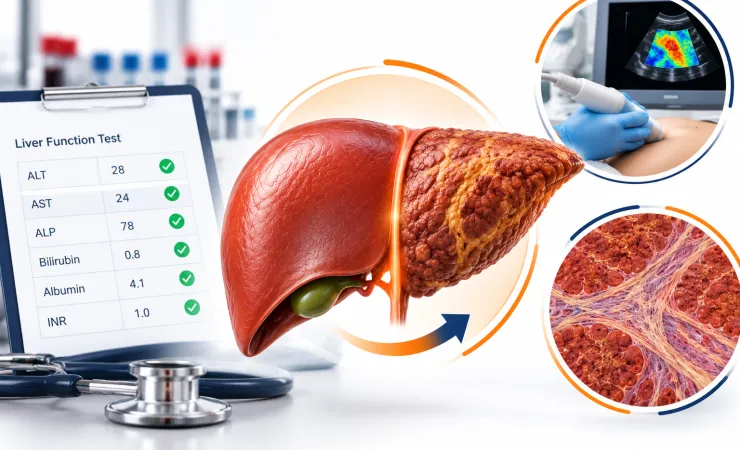
Blood Tests
Blood tests help assess liver function and identify possible causes of liver disease.
Common investigations include:
Liver function tests (ALT, AST, ALP, GGT)
Bilirubin
Albumin
International Normalised Ratio (INR)
Complete blood count (CBC)
Kidney function tests
Sodium levels
Viral hepatitis screening
Autoimmune markers where appropriate
Imaging Tests
Imaging provides valuable information about liver structure.
Common techniques include:
Ultrasound
Transient elastography (FibroScan)
CT scan
MRI
FibroScan is particularly useful because it estimates liver stiffness without surgery.
Liver Biopsy
Although less commonly required today, a liver biopsy may be recommended if the diagnosis remains uncertain or additional information is needed about the cause or severity of liver disease.
Understanding Results
Doctors use several tools to estimate disease severity and guide treatment decisions.
MELD 3.0 Score
The Model for End-Stage Liver Disease (MELD 3.0) score estimates the severity of advanced liver disease using laboratory values such as:
Bilirubin
Creatinine
INR
Sodium
Albumin
Sex (as incorporated in the MELD 3.0 model)
A higher MELD 3.0 score generally indicates more severe liver disease and may influence liver transplant assessment. The score is most useful when interpreted alongside a patient's overall clinical condition.
Child-Pugh Classification
The Child-Pugh score classifies cirrhosis into Class A, B, or C based on:
Bilirubin
Albumin
INR
Ascites
Hepatic encephalopathy
It helps estimate liver function and the risk of complications.
Monitoring Disease Progression
A single test result provides only a snapshot of liver health. Regular monitoring over time is often more valuable for identifying changes and guiding treatment.
Patients with chronic liver disease frequently benefit from maintaining organised records of laboratory results, imaging findings, MELD 3.0 scores, sodium levels, and clinic appointments. Digital tools such as the Liverlytics mobile application can help users track historical data, review trends through visual graphs, select custom date ranges, and generate reports that may support more productive conversations during follow-up appointments. These tools are intended for health record organisation and should not replace professional medical advice.
Key Point
Early diagnosis, regular monitoring, and understanding test results allow healthcare teams to identify complications sooner, tailor treatment plans, and improve long-term outcomes for people living with liver cirrhosis.
Treatment & Management (Blog Content + Infographic)
Treatment and Management
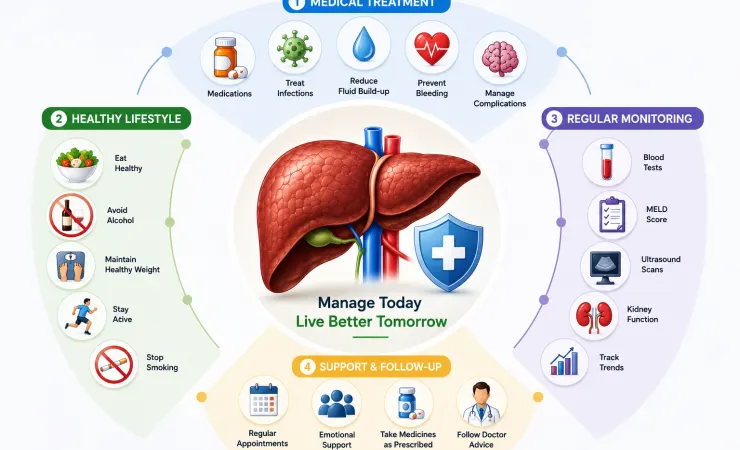
Although liver cirrhosis cannot usually be reversed, appropriate treatment can slow disease progression, reduce complications, and improve both life expectancy and quality of life. Treatment depends on the underlying cause, the severity of liver damage, and whether complications have developed.
Medical Treatments
Treatment
Purpose
💊 Medications
Manage symptoms and complications
🦠 Antiviral therapy
Treat Hepatitis B or C
💧 Diuretics
Reduce fluid build-up (ascites & oedema)
🩸 Beta-blockers
Lower the risk of variceal bleeding
🧠 Lactulose / Rifaximin
Manage hepatic encephalopathy
💉 Vaccinations
Protect against infections
🏥 Liver Transplant
Considered for advanced cirrhosis
Lifestyle Management
Healthy lifestyle choices play a vital role in slowing liver damage.
Recommended Lifestyle Changes
🥗 Eat a balanced, nutritious diet
🚫 Avoid alcohol completely
⚖ Maintain a healthy weight
🏃 Stay physically active
💊 Take medicines exactly as prescribed
🚭 Stop smoking
💧 Stay hydrated (as advised by your doctor)
🩺 Attend regular medical appointments
Monitoring Progress
Regular monitoring helps detect complications early and allows healthcare providers to adjust treatment plans.
Doctors commonly monitor:
🩸 Liver function tests (LFTs)
📈 MELD 3.0 score
⚖ Sodium levels
🖥 Ultrasound scans
🔬 Alpha-fetoprotein (AFP) for liver cancer surveillance (where appropriate)
🩺 Endoscopy for oesophageal varices
🧪 Kidney function tests
💉 INR and albumin levels
Patients managing chronic liver disease often benefit from keeping organised records of laboratory results and clinical assessments. Digital tools such as the Liverlytics mobile application can help users track MELD 3.0 scores, sodium levels, historical trends, and generate reports that may support more informed discussions during healthcare appointments. These tools are intended to assist with health record organisation and are not a substitute for medical care.
Practical Tips for Patients and Caregivers
Daily Tips
✅ Take medications consistently.
✅ Do not drink alcohol.
✅ Follow your doctor's dietary advice.
✅ Limit salt intake if advised.
✅ Monitor your weight regularly.
✅ Watch for swelling or jaundice.
✅ Keep all follow-up appointments.
✅ Report new symptoms promptly.
✅ Stay up to date with recommended vaccinations.
✅ Seek emotional support from family, friends, or support groups.

“ He who is contented is rich. ”
— Laozi
Let’s Get in Touch
Your email address will not be published. Required fields are marked *
Recent Post

Looking for a Smarter Way to Track Liver Health?
Try it stress-free — We never modify medical data without your confirmation.

Comments :
Ooops!
No comments found.