Blog Post Details Page
10:29 AM | August 14, 2026 125 Views
Liver Enzymes Explained: What High ALT and AST Levels Really Mean
Introduction
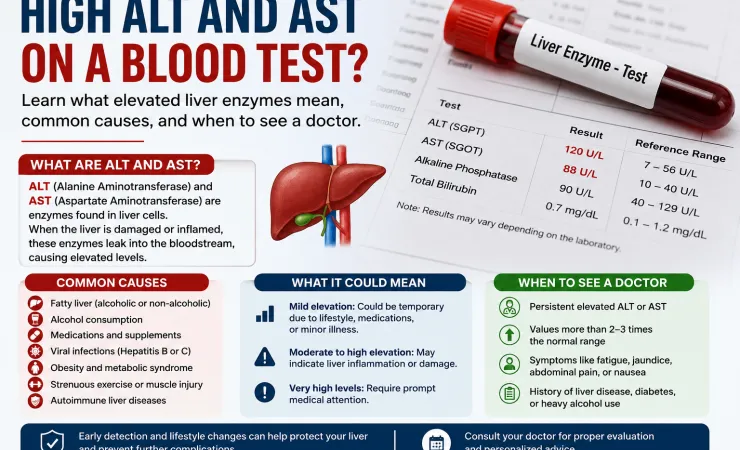
Seeing "abnormal" next to ALT or AST on a routine blood test result is unsettling, especially when there were no obvious symptoms beforehand. It's also extremely common — mildly raised liver enzymes turn up in roughly one in ten adults having routine bloodwork, most often without any liver disease ever being diagnosed. Understanding what ALT (alanine aminotransferase) and AST (aspartate aminotransferase) actually measure, what different levels of elevation mean, and when it's genuinely a cause for concern can turn a frightening lab result into a manageable next step. This article explains what these liver enzymes do, the most common reasons they rise, how doctors interpret the pattern, and what to do if your own results come back high.
ALT and AST are enzymes released into the blood when liver cells are damaged or inflamed. Mildly raised levels (under three times the upper limit of normal) are usually caused by fatty liver disease, alcohol, or medication, and often settle with lifestyle changes. Levels persistently high, rising rapidly, or above 1,000 U/L need urgent medical assessment.
What Are ALT and AST?
Definition
ALT and AST are aminotransferase enzymes that live mainly inside liver cells, where they help the body process amino acids. ALT is found almost exclusively in the liver, which makes it a fairly specific marker of liver cell injury. AST is present in the liver too, but also in muscle, heart, kidney and brain tissue, so a raised AST on its own doesn't automatically point to the liver — it can reflect a strenuous workout, a muscle injury, or even a cardiac event just as easily.
When liver cells are damaged, inflamed, or die off, they leak these enzymes into the bloodstream, and blood levels rise. A liver enzyme test doesn't measure how well the liver is functioning (that's closer to what bilirubin, albumin, and clotting tests show); it measures how much cell damage or irritation is currently happening.
Why It Matters
Because the liver has few nerve endings, damage can build up quietly for years with no pain or obvious symptoms. Blood tests are often the first and only clue that something needs attention, which is why understanding what a raised reading actually means — rather than panicking or dismissing it — matters so much.
Key Facts About ALT and AST
Typical adult reference ranges are roughly 7–56 U/L for ALT and 10–40 U/L for AST, though exact cut-offs vary between laboratories and by sex.
Mild elevation is generally defined as up to around five times the upper limit of normal, and this pattern is common in primary care.
The two most frequent causes of mildly raised transaminases are non-alcoholic fatty liver disease (now often called MASLD) and alcohol-related liver disease.
The relationship between the two enzymes carries diagnostic weight: an AST that runs noticeably higher than ALT (roughly double or more) is a pattern more typical of alcohol-related liver injury, while ALT higher than AST is more typical of fatty liver disease or viral hepatitis.
Enzyme levels can be entirely normal in a substantial proportion of people who do have underlying liver disease, so a "normal" result doesn't fully rule out a problem if other risk factors or symptoms are present.
Symptoms, Causes, and Risk Factors
Common Symptoms
Mild to moderate enzyme elevation frequently causes no symptoms at all and is picked up incidentally on routine bloodwork. When symptoms do occur, they tend to be non-specific: fatigue, mild discomfort under the right ribs, nausea, or reduced appetite. More pronounced symptoms — yellowing of the skin or eyes (jaundice), dark urine, pale stools, itching, or swelling of the abdomen or legs — suggest more significant liver injury and warrant prompt medical review.
Main Causes
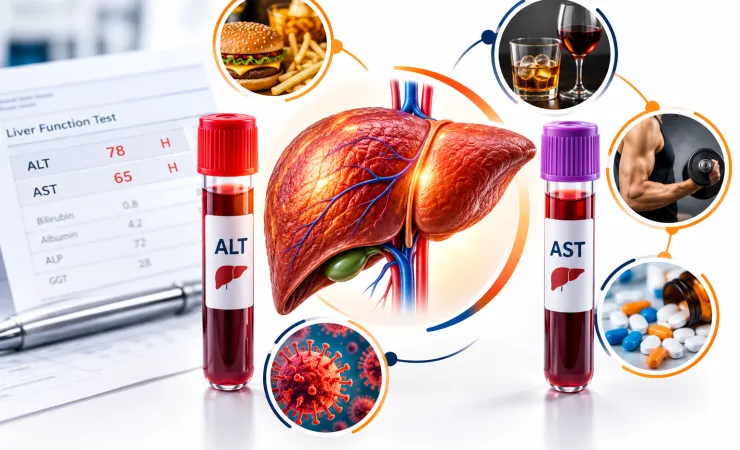
Fatty liver disease (associated with excess weight, insulin resistance and type 2 diabetes)
Alcohol-related liver injury
Viral hepatitis (hepatitis A, B and C)
Medications, including some over-the-counter painkillers such as paracetamol/acetaminophen in overdose, certain antibiotics, and some cholesterol or seizure medications
Autoimmune hepatitis
Muscle injury or intense exercise (mainly affects AST)
Bile duct obstruction, such as gallstones
Risk Factors
Excess body weight, type 2 diabetes, regular or heavy alcohol use, a family history of liver disease, certain long-term medications, and viral hepatitis exposure all raise the likelihood of elevated liver enzymes.
Diagnosis and Testing
Diagnostic Methods
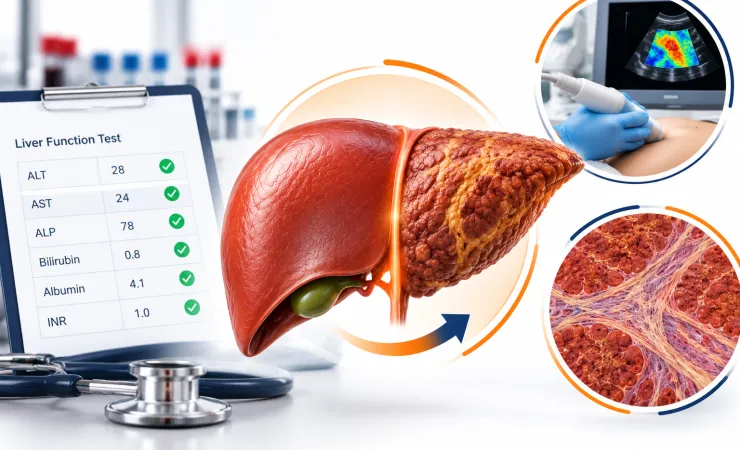
Liver enzymes are usually measured as part of a liver function test (LFT) or a broader metabolic panel, requiring a simple blood sample. If ALT or AST come back raised, a doctor will typically look at the whole panel together — including alkaline phosphatase (ALP), gamma-glutamyl transferase (GGT), and bilirubin — rather than any single number in isolation, since the pattern of results points toward different causes. Further tests might include viral hepatitis screening, an autoimmune antibody panel, an ultrasound scan of the liver, and, occasionally, a liver biopsy or specialised imaging such as a FibroScan.
Understanding Results
The degree of elevation matters. Mild rises (up to roughly three times the upper limit of normal) are most often linked to fatty liver disease or medication effects. Marked elevations above 1,000 U/L point toward causes such as drug-induced liver injury (including paracetamol overdose), acute viral hepatitis, a sudden drop in blood flow to the liver, or autoimmune hepatitis, and typically warrant urgent specialist referral. A single abnormal result is rarely diagnostic on its own — trends over repeat testing, usually a few weeks to a few months apart, give a much clearer picture.
Treatment and Management
Medical Treatments
Treatment targets the underlying cause rather than the enzyme numbers directly. This might mean antiviral therapy for hepatitis, immunosuppressive treatment for autoimmune hepatitis, stopping or switching an offending medication, or managing a bile duct obstruction. There is no medication that "lowers" ALT or AST directly — the enzymes fall once the underlying liver irritation resolves.
Lifestyle Management
For the most common causes — fatty liver disease and alcohol-related injury — lifestyle changes are the primary treatment. This typically includes gradual, sustained weight loss where relevant, reducing or stopping alcohol intake, regular physical activity, and improving overall diet quality. These changes can meaningfully reduce enzyme levels and, in fatty liver disease, are the main evidence-based intervention.
Monitoring Progress
Because liver enzymes can fluctuate, doctors usually recommend repeat blood tests rather than reacting to a single abnormal result. Tracking values over time — alongside other markers where relevant — helps confirm whether a trend is improving, stable, or worsening.
Practical Tips for Patients and Caregivers
Bring a full list of medications and supplements to appointments, since several common drugs can raise liver enzymes.
Be honest about alcohol intake with your doctor; it's one of the most important pieces of information for interpreting results.
Ask for a copy of your actual numbers and reference ranges rather than just "normal" or "abnormal" — trends matter more than a single reading.
If you're living with a chronic liver condition, keeping organised records of test results over time makes appointments more productive and helps you and your clinician spot patterns early. Patients managing chronic liver disease sometimes find it useful to log values such as MELD 3.0 scores and sodium levels between appointments; apps such as Liverlytics allow this kind of tracking, with visual graphs, custom date-range views, and exportable reports that can support a conversation with a healthcare provider. This is a record-keeping aid, not a diagnostic or treatment tool.
Common Mistakes and Misconceptions
"Normal enzymes mean a healthy liver." Not necessarily — some people with significant fatty liver disease or even early cirrhosis have normal ALT and AST.
"High enzymes always mean serious liver disease." In most primary care settings, mild elevations are linked to manageable causes like fatty liver disease, not life-threatening conditions.
"Only heavy drinkers get elevated liver enzymes." Fatty liver disease unrelated to alcohol is now one of the most common causes worldwide, linked closely to weight and metabolic health.
"One abnormal test means you need immediate treatment." A single mildly raised result usually calls for repeat testing and simple lifestyle review first, not immediate intervention.
When Should You Speak to a Doctor?
Seek prompt medical advice if you notice jaundice, dark urine, pale stools, persistent nausea or vomiting, unexplained abdominal swelling or pain, or confusion. Also speak to a doctor if a blood test shows liver enzymes several times above the normal range, if levels are rising on repeat testing, or if you have risk factors such as heavy alcohol use, obesity, diabetes, or a family history of liver disease, even without symptoms.
Expert Insights
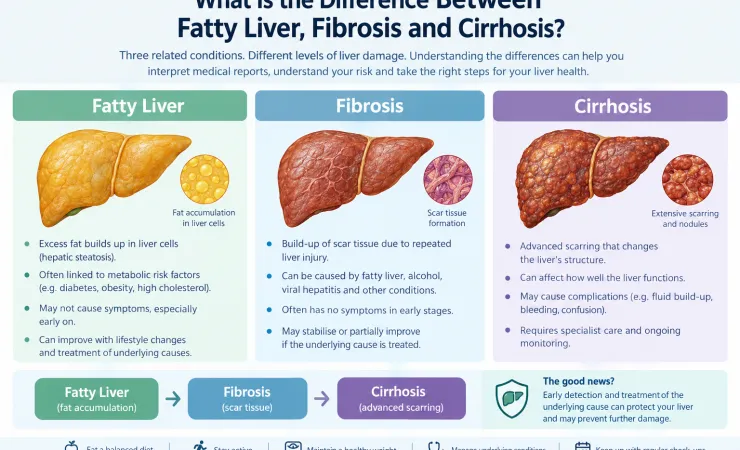
Clinicians increasingly view mildly elevated liver enzymes as an early warning sign of metabolic health rather than a purely "liver" issue — research has linked even high-normal ALT and AST levels to a greater likelihood of metabolic syndrome. This reframes a mildly abnormal result as an opportunity: a prompt to review weight, activity levels, alcohol intake, and diabetes risk, well before more serious liver damage develops. Another frequently overlooked point is that liver enzymes can be entirely normal even with meaningful underlying fibrosis, particularly in fatty liver disease, which is why doctors weigh test results alongside risk factors and, when indicated, imaging rather than treating a normal number as a guarantee of liver health.
People Also Ask
Can stress cause high liver enzymes? Stress itself isn't a direct, well-established cause, though stress-related behaviours such as increased alcohol use or poor diet can contribute indirectly.
Is a slightly high ALT dangerous? A mildly raised ALT alone is usually not dangerous and is often linked to manageable causes like fatty liver disease, but it should still be discussed with a doctor and re-checked.
Can dehydration raise liver enzymes? Dehydration is not a typical direct cause, though it may affect some blood test results generally; liver-specific causes should still be investigated.
Do liver enzymes go back to normal? Yes, in many cases — particularly with fatty liver disease, medication-related causes, or alcohol-related injury — enzymes can normalise once the underlying cause is addressed.
What foods lower liver enzymes? No single food "lowers" enzymes directly, but diets that support weight management and reduce liver fat, such as those rich in vegetables, whole grains and lean protein, are generally recommended.
Can exercise raise AST levels? Yes — intense exercise can temporarily raise AST because it is also released from muscle tissue, not just the liver.
Is fatty liver disease reversible? In many cases, particularly when caught early, fatty liver disease can improve significantly with weight loss and lifestyle changes.
Frequently Asked Questions
1. What is considered a "high" ALT or AST level? Reference ranges vary by lab, but ALT above roughly 56 U/L and AST above roughly 40 U/L are commonly flagged as elevated. Your lab report will show the specific range used for your test.
2. What's the difference between ALT and AST? ALT is found almost exclusively in liver cells, making it a more liver-specific marker. AST is present in the liver as well as muscle, heart, kidney and brain tissue, so it's less specific to liver injury alone.
3. Can medication cause high liver enzymes? Yes. Certain painkillers, antibiotics, cholesterol medications, and anti-seizure drugs are among those that can raise ALT or AST. Always tell your doctor about every medication and supplement you take.
4. How long does it take for liver enzymes to return to normal? This depends entirely on the cause. Medication-related elevations often improve within weeks of stopping the drug, while fatty liver disease may take months of sustained lifestyle change to show improvement.
5. Does alcohol always cause elevated AST and ALT? Not always — occasional moderate drinking may not raise enzymes at all, but regular heavy drinking is one of the most common causes of persistently high levels, often with AST higher than ALT.
6. Can you have liver damage with normal enzyme levels? Yes. Liver enzymes can remain normal even with significant fatty liver disease or fibrosis, which is why doctors also consider risk factors, symptoms, and sometimes imaging.
7. Should I stop drinking alcohol completely if my liver enzymes are high? This depends on the underlying cause and severity, and is best discussed directly with your doctor, but reducing or stopping alcohol is commonly advised when it may be contributing.
8. What tests are done after high liver enzymes are found? Doctors typically repeat the blood test, review the full liver panel, and may add viral hepatitis screening, autoimmune markers, and an ultrasound scan depending on the pattern of results.
9. Can weight loss lower liver enzymes? Yes, particularly in fatty liver disease, gradual and sustained weight loss is one of the most evidence-based ways to reduce elevated ALT and AST.
10. Is a liver biopsy always needed for high liver enzymes? No. Most cases are assessed with blood tests and imaging first; a biopsy is reserved for situations where the diagnosis remains unclear or where the degree of liver damage needs to be assessed directly.
Key Takeaways
ALT and AST are enzymes released when liver cells are damaged or irritated; ALT is more liver-specific, while AST also reflects muscle and heart tissue.
Mild elevations are common and most often linked to fatty liver disease, alcohol, or medications.
The pattern and ratio of ALT to AST, alongside other liver tests, give clinicians important diagnostic clues.
Enzymes can be normal even with underlying liver disease, so risk factors and symptoms still matter.
Marked or rapidly rising levels, or levels alongside jaundice, dark urine, or abdominal swelling, need urgent medical assessment.
Lifestyle changes — reducing alcohol, managing weight, and reviewing medications — are the main tools for improving mildly raised enzymes.
Conclusion
A raised ALT or AST result is common and, in most cases, reflects a manageable underlying cause rather than a medical emergency. What matters most is the degree of elevation, the pattern between the two enzymes and other liver markers, and whether the trend is improving or worsening over repeat testing. If your results come back abnormal, don't panic — but do follow up with your doctor, share your full medical and lifestyle history, and ask what repeat testing or further investigation is recommended for your specific situation.

“ Nothing worth having comes easy. ”
— Theodore Roosevelt
Let’s Get in Touch
Your email address will not be published. Required fields are marked *
Recent Post

Looking for a Smarter Way to Track Liver Health?
Try it stress-free — We never modify medical data without your confirmation.

Comments :
Ooops!
No comments found.