Blog Post Details Page
10:03 AM | March 26, 2026 225 Views
Digital Health & Liver Care: The Future of Cirrhosis Management
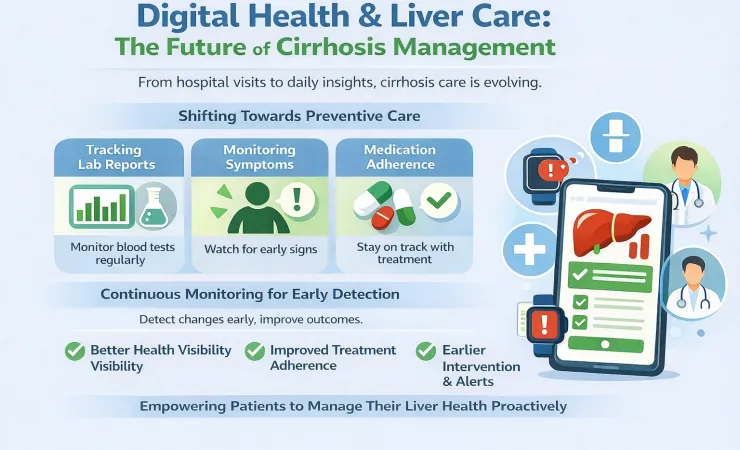
Managing cirrhosis has always required careful attention, but traditionally, that care has been limited to hospital visits and occasional tests. For many patients, this meant reacting to problems only after symptoms appeared.
Today, that approach is gradually changing.
With the rise of digital health, cirrhosis management is becoming more continuous, more organised, and importantly, more proactive. Instead of waiting for warning signs, patients and caregivers can now stay connected to their health every day.
A Move Towards Preventive Care
One of the biggest shifts in healthcare today is the move from reactive to preventive care. Cirrhosis often develops and progresses silently, making early intervention difficult without regular monitoring.
Digital tools are helping bridge this gap.
By enabling individuals to track their health consistently, these tools support early detection of changes that might otherwise go unnoticed. This is especially important in liver conditions, where timely action can significantly improve outcomes.
Why Monitoring Matters in Cirrhosis
Cirrhosis is not a condition that remains static. It can change gradually or sometimes suddenly, depending on various factors. This makes continuous monitoring essential.
Tracking Lab Reports: Regular blood tests provide insights into liver function. Monitoring trends over time helps determine whether the condition is stable, improving, or worsening.
Monitoring Symptoms: Symptoms such as fatigue, swelling, or appetite changes may seem mild but can indicate important changes in liver health. Keeping a record helps in identifying patterns early.
Medication Adherence: Cirrhosis treatment often involves multiple medications. Taking them correctly and consistently is essential for effective management.
The Role of Digital Health Platforms
Digital health platforms bring structure to what can otherwise feel overwhelming. Instead of managing scattered reports and relying on memory, patients can access everything in one place.
This not only improves personal awareness but also enhances communication with healthcare providers. When accurate data is readily available, doctors can make more informed decisions.
More importantly, digital tools support early alerts. Subtle changes in health data can be identified sooner, allowing for timely medical attention.
Supporting Smarter Liver Care
In recent years, platforms like the Liverlytics app have been developed to support this evolving approach to liver care. By helping users track lab reports, monitor symptoms, and maintain a consistent record of their health, such tools simplify long-term management.
Rather than replacing clinical care, they act as a supportive layer—making it easier for individuals to stay informed and proactive.
The Future of Cirrhosis Management
Healthcare is moving towards a more connected model, where care continues beyond clinics and hospitals. Digital health is playing a central role in this transformation.
For cirrhosis patients, this means:
Better visibility into their health
Improved treatment adherence
Earlier detection of complications
Final Thoughts
Cirrhosis management is no longer just about responding to symptoms. It is about staying aware, tracking changes, and acting early.
Digital health is making this possible—bringing care closer to daily life and empowering individuals to take control of their liver health.
Because in conditions like cirrhosis, small insights at the right time can lead to better outcomes.

“ Always remember that you are absolutely unique. Just like everyone else. ”
— Margaret Mead
Let’s Get in Touch
Your email address will not be published. Required fields are marked *
Recent Post
Looking for a Smarter Way to Track Liver Health?
Try it stress-free — We never modify medical data without your confirmation.

Comments :
Ooops!
No comments found.