Blog Post Details Page
04:28 PM | May 05, 2026 211 Views
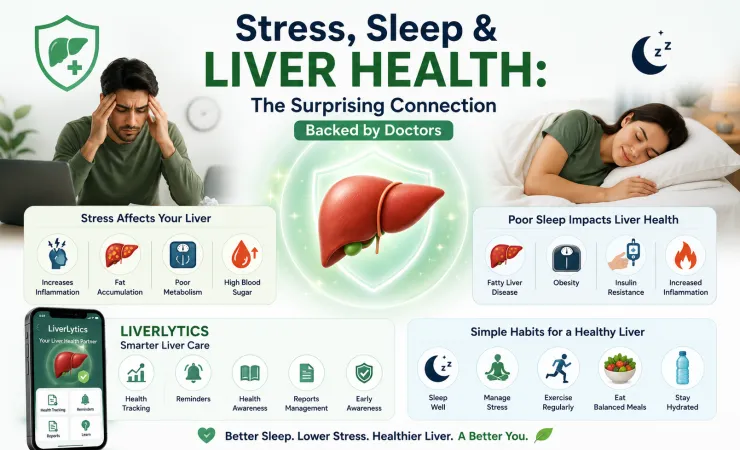
Stress, Sleep & Liver Health: The Surprising Connection Backed by Doctors
Introduction
Most people associate liver disease with alcohol or unhealthy food, but doctors are now warning about two hidden lifestyle factors silently affecting liver health: chronic stress and poor sleep.
In today’s fast-paced digital lifestyle, irregular sleep schedules, work pressure, anxiety, screen addiction, and unhealthy routines are becoming common, especially among young adults. Medical experts now believe these habits may increase the risk of fatty liver disease, liver inflammation, and long-term liver damage.
The liver is one of the body’s most important organs, responsible for detoxification, metabolism, digestion, and energy regulation. When stress levels remain high and sleep quality declines, liver function can also become affected over time.
How Stress Impacts Liver Health
Stress triggers the release of hormones such as cortisol and adrenaline. While these hormones help the body respond to pressure temporarily, long-term stress may lead to:
Increased inflammation
Fat accumulation in the liver
Poor metabolism
Weight gain
Increased blood sugar levels
Doctors also observe that stress often pushes people toward unhealthy habits such as:
Overeating
Increased alcohol consumption
Smoking
Poor diet
Lack of exercise
These lifestyle patterns place additional pressure on liver health and may increase the risk of fatty liver disease and liver cirrhosis.
The Link Between Poor Sleep & Liver Disease
Sleep is essential for the body’s natural repair process. During sleep, the liver works to recover, regulate metabolism, and support detoxification.
However, modern lifestyles are reducing sleep quality due to:
Late-night screen usage
Stress and anxiety
Excessive workload
Social media addiction
Irregular sleep routines
According to healthcare experts, poor sleep may contribute to:
Fatty liver disease
Obesity
Insulin resistance
Hormonal imbalance
Increased inflammation
Over time, these conditions can silently damage liver health.
Warning Signs You Should Not Ignore
Early liver problems may not show obvious symptoms, but some common warning signs include:
Constant fatigue
Low energy levels
Poor sleep quality
Digestive discomfort
Brain fog
Unexplained weight changes
Difficulty concentrating
Because these symptoms are often linked to stress or busy routines, many people ignore them until the condition worsens.
Why Early Monitoring Matters
Doctors strongly recommend regular liver monitoring for individuals dealing with:
High stress levels
Poor sleep habits
Obesity
Diabetes
Alcohol consumption
Sedentary lifestyle
Early diagnosis can help prevent serious liver complications and improve long-term health outcomes.
How LiverLytics Helps in Smarter Liver Care
The LiverLytics app is helping users monitor liver health more effectively through digital healthcare support and awareness tools.
Key Features of LiverLytics
Smart Health Tracking
Track liver-related health information and maintain organized medical records digitally.
Medication & Appointment Reminders
Get timely reminders for medicines, doctor consultations, and routine health check-ups.
Health Awareness Content
Access educational information related to:
Fatty liver disease
Liver cirrhosis
Healthy sleep habits
Stress management
Preventive liver care
Easy Report Management
Store and access important medical reports anytime through your smartphone.
Early Awareness Support
Regular tracking helps users identify potential health concerns early and seek medical guidance on time.
Simple Tips to Protect Your Liver
Doctors recommend the following lifestyle habits for better liver health:
Sleep 7–8 hours daily
Exercise regularly
Manage stress effectively
Eat balanced meals
Reduce processed food and sugar
Stay hydrated
Limit alcohol consumption
Schedule regular health check-ups
Small daily lifestyle improvements can make a significant difference in protecting liver health.
Conclusion
Stress and poor sleep are becoming major hidden contributors to liver disease in modern lifestyles. While many people focus only on diet and alcohol, doctors now emphasize the strong connection between mental wellness, sleep quality, and liver health.
Early awareness, healthier habits, and regular monitoring can help reduce long-term liver disease risks.
Digital healthcare platforms like the LiverLytics app are making liver care smarter, simpler, and more accessible by helping users track health, manage reports, and stay informed.
Better sleep, lower stress, and proactive monitoring can go a long way in protecting your liver health.

“ Do what you can, with what you have, where you are. ”
— Theodore Roosevelt
Let’s Get in Touch
Your email address will not be published. Required fields are marked *
Recent Post

Looking for a Smarter Way to Track Liver Health?
Try it stress-free — We never modify medical data without your confirmation.

Comments :
Ooops!
No comments found.